
Hidden spirits

There was once a young girl who knew only one language, and at the time, it was more than enough for her. She grew up in this language, it was the one she spoke with her parents and in school. She conversed, related to people, lived her life in this language. And she LOVED this language; loved to play around with it, loved to express herself (both out loud and in writing) in it, loved the peculiar rhythms and syncopation of this language. She even loved writing out the most basic words in this language on paper; sometimes she’d “air-write” a word stuck in her mind, mesmerized by the loops of the y’s and the p’s she traced over and over again with her finger in front of her nose. Yes, she loved her mother tongue, English.
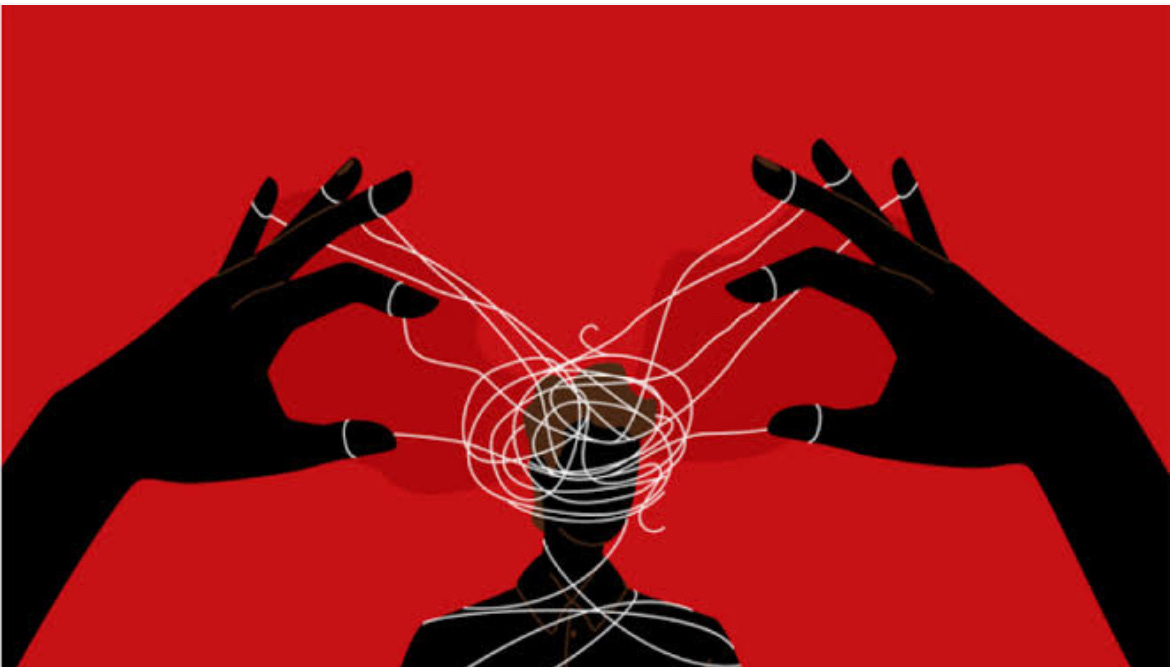
Later though, in her early twenties, she encountered another language in real life, one that she was suddenly immersed into and surrounded by, as she had moved from the United States to Bulgaria to work with the Peace Corps. She had studied and been good at other languages in school (namely French), but this was different. For the first time, she caught a glimpse of the actual spirit hidden deep in the crevices and folds of other languages. She realised that when she spoke this other language, that she was able to tap into a hidden spirit, her *own* spirit actually, which had been there all along, but had sides to it she hadn’t known existed. It was thrilling; she’d found a linguistic wormhole she could enter, through which she could access entirely new aspects of her character. What freedom! Bulgarian was like a secret door opening in an already large garden’s wall, leading to an entirely different garden. Her world view expanded beyond her wildest dreams, while also allowing her to peek into her first, still-beloved garden (of English) from an entirely different angle. She was funny, kind, and more generous in Bulgarian, in ways that didn’t come as easily in English. Or maybe it just seemed that way to her? Foreign languages are so mysterious that way; do they give us the tools not only to express emotions in ways different from how we normally might have, but also allow us to literally become different people, people who had been buried inside of us all along? I believe it is the latter, more than the former.
This same young lady is now me, a woman, and the journey of my life has led me from the spirit hidden in Bulgarian to the spirit hidden in Turkish, and truthfully by now, the threads of my linguistic spirit are impossible to untangle from one another. My Turkish is far better than my Bulgarian ever was, but I do love to hearken back to Bulgarian since it’s where I first uncovered my personal concept of this hidden spirit. Of course, I guess on some levels, there is a whole “what came first, the chicken or the egg?” aspect to this all. When I’m speaking Turkish in Istanbul, am I different from my English-speaking self *because* the ancientness of this language requires me to alter my character in order to survive and flourish in it? I find, for instance, that I am more tolerant of people when I’m speaking Turkish; but this might have to do with the fact that I am less rigid with sense of time in Turkish than in English. When I am speaking Turkish, I am all about things being “10 days ago” or “one day later”, whereas in English, I feel around for a specific time, hour, day of the week when recounting a story. This flexibility with sense of time in conversation tends to mean that I am also a more practical storyteller in Turkish than I am in English; I get to the point faster, and also take a very different path getting there than I would in English. I am also a more formal person in Turkish than I am in English; I am full of flowery “madams” and “my pleasures” and “do not mention its” in ways that simply don’t exist in my native tongue. Maybe that’s why I often feel vaguely like royalty (an Ottoman sultana perhaps?) when speaking formal Turkish with strangers I meet, certainly more than I do when chatting with strangers in English…I guess you could say Turkish has unlocked the hidden spirit of QUEEN in my character for me. Who, then, could blame me for loving this linguistic garden of mine?
I know that none of the above would ever pass muster in an academic paper on linguistics, but formal notions of language acquisition don’t really cover how it plays out on our tongues and in our hearts and minds. And while none of my “hidden spirit” ideas are quantifiable, they are, for me, one hundred percent undeniable…and since I’ve tapped my inner Sultana in Turkish, you’re going to have to take my word for it... it’s a royal decree.
Fellow language lover hopping between dimensions, you capture the feeling so well and write about it so beautifully!
I too feel like I have a different persona in different languages. My main foreign language used to be French, but it didn’t seep into the soul, I always felt like a breezy oh la la in it, gliding on the surface. Maybe this is because no significant life events and experiences happened in it, just work.
Between Russian and English, I feel more serious in Russian and that words somehow land heavier, and the humor is funnier. It’s also much more situationally variational, as if you are speaking three different kinds of language in three different situations. Like you write about Turkish, a lot more flowery formalities and nuance, the tu/vous equivalents etc.
I get a waft of the “spirit in the crevices” of English with TS Eliot’s and his cats, for instance.
English is such an open, light language that it brings out more extroverted behaviours, which aren’t my default state. It’s easier to share in English for me because of its lightness.
How’s the Turkish swearing?)))
My inner Queen bows & curtsies to your inner Sultana. And also, I think the imam just fainted…